Sci-Fi Podcast "Flight 008" | Episode 7 - Oblivion is a Crease Left by Memory: Seat 17F | DUST
Episode Description
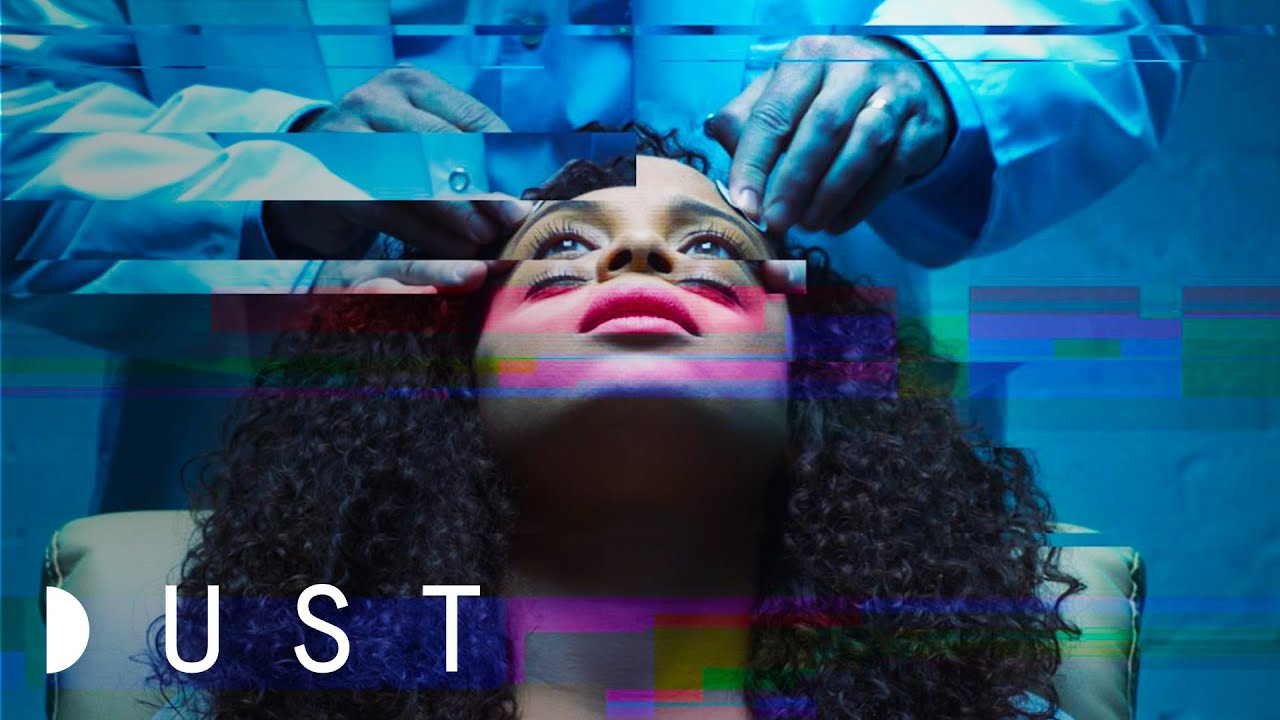
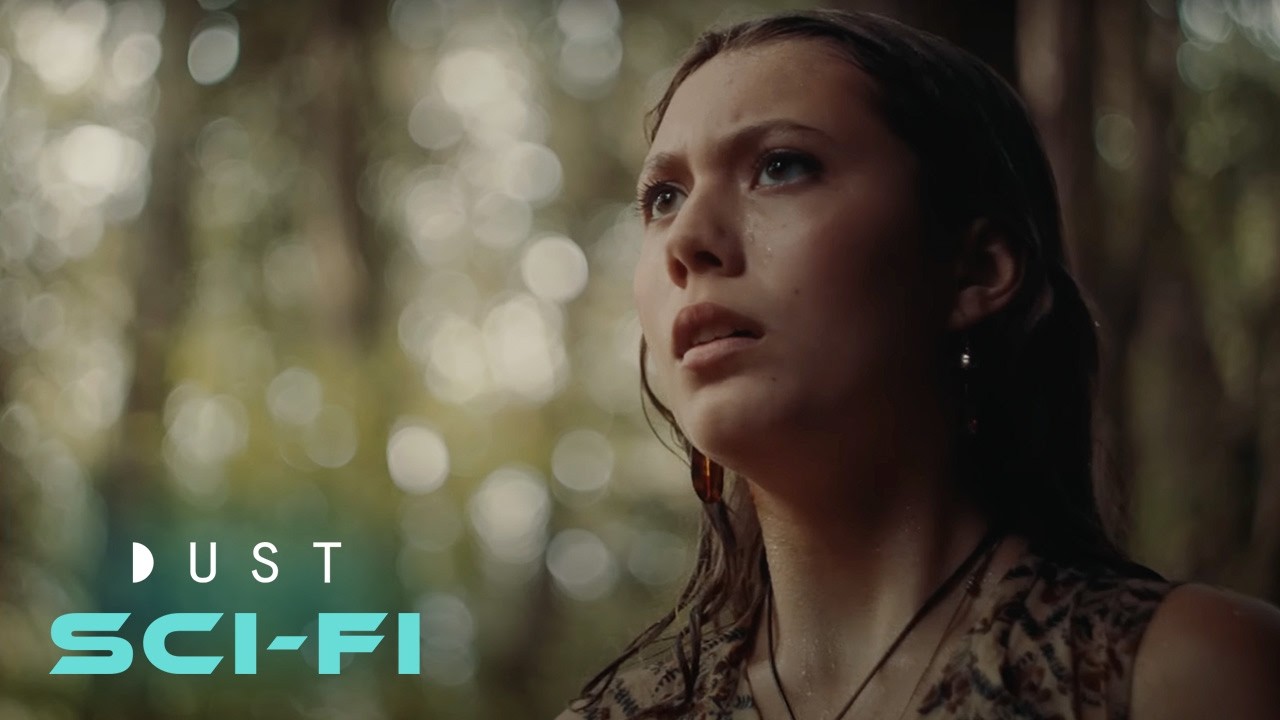
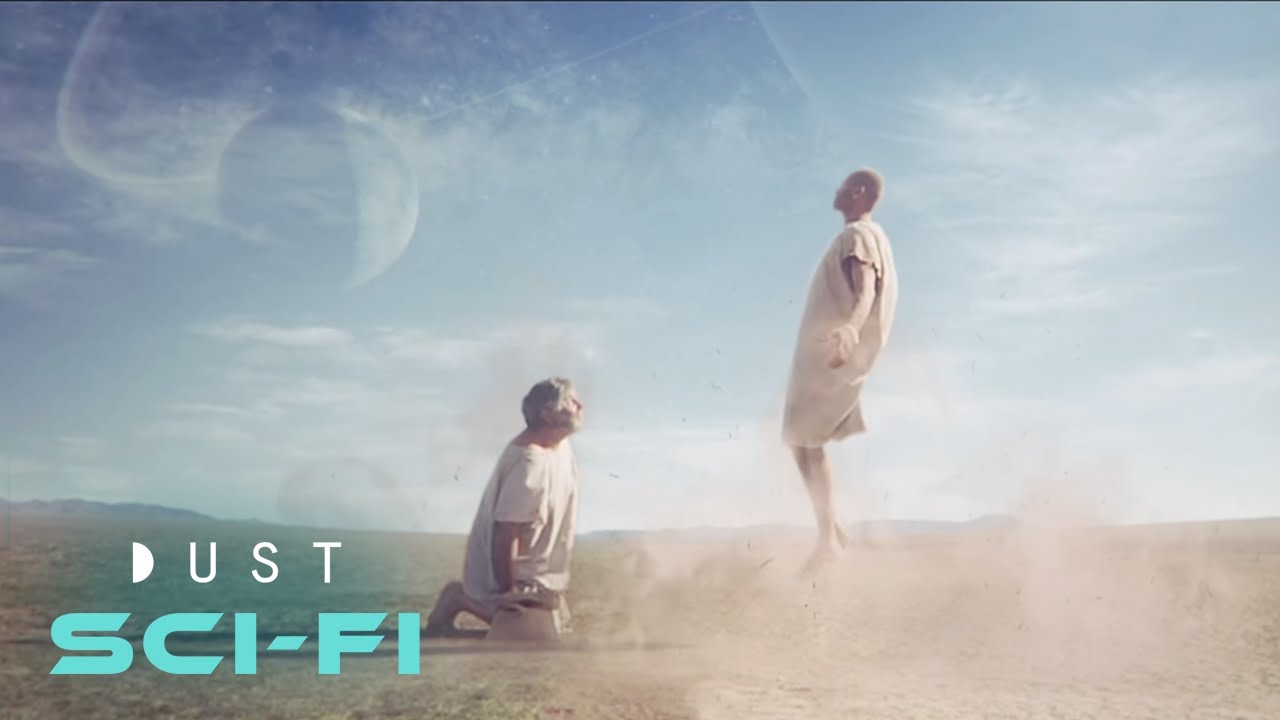
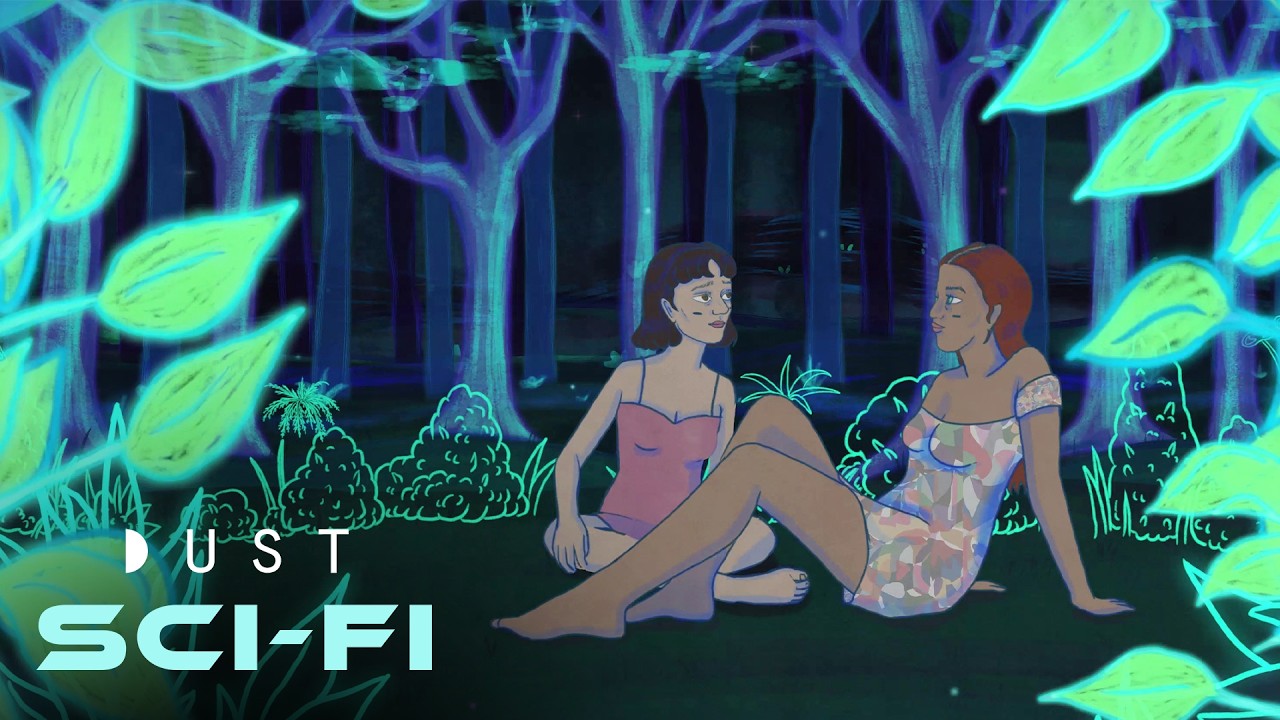
Technology and art may seem at odds, but in this stunningly beautiful portrait, Nebula-award winning author Chen Qiufan shows us a future made vivid through shared artistic experience.
"Oblivion is a Crease Left by Memory: Seat 17F" is written by Chen Qiufan, translated by Ken Liu, and performed by Greg Watanabe.
Visuals provided by DUST FLOW. FLOW is a meditative experience designed to send you into a state of digital relaxation.
About DUST: DUST presents thought-provoking science fiction content, exploring the future of humanity through the lens of science and technology. From timeless classics to cutting-edge movies, series, short films, and podcasts, DUST acquires, produces and distributes all content types.
DUST is also available on Amazon FireTV, AndroidTV, AppleTV, Fubo, IMDBTV, iOS, Peacock, Roku, Redbox, Samsung TV, Sling, STIRR, Tivo, Vizio, Xumo and 7Plus. On our OTT platforms, we offer cutting-edge and classic feature films, series, podcasts, and our entire shorts library. #TheFutureAwaits
"
Connect with DUST Website: http://www.watchdust.com Sign-up for DUST newsletter: http://eepurl.com/b_SKAz Watch DUST on your TV: Available on Roku, Samsung TV, Apple TV, Android TV...and more Watch more on YouTube: http://bit.ly/2amTSen Follow Us on Facebook: http://bit.ly/2aqYgtZ Follow Us on Instagram: http://bit.ly/2amAhRt
Listen to the DUST podcast: Apple: http://bit.ly/DUST-Audio Spotify: http://bit.ly/DUST-Spotify Stitcher: http://bit.ly/DUST-Stitcher Castbox: http://bit.ly/DUST-Castbox iHeart: http://bit.ly/DUST-iHeart
About Gunpowder + Sky: Creating content that resonates and impacts pop culture conversation, by empowering creators to take risks and experiment relentlessly in the pursuit of novel stories and formats.
https://www.youtube.com/watchdust Subscribe to the DUST and ALTER newsletter: http://eepurl.com/dChYXb
Read the full transcriptHide the full transcript
- (soft music) - [Narrator] Hello. My name is Kai. You have tuned into a special season of Dust.
- You have tuned into the future. The future is a web and each strand has the power to catch you.
- Today, find yourself entangled in Oblivion is a Crease Left by Memory, written by Chen Qiufan,
- translated by Ken Liu and brought to life by Greg Watanabe. This episode, made in partnership with XPRIZE,
- explores the future intersection between art and technology. (funky music) At 4:58 a.m. on June 28th, 2020, the passengers on board
- ANA Flight 008 en route from Tokyo to San Francisco are cruising at an altitude of 37,000 feet,
- approximately 1,500 nautical miles off the west coast of the United States. A small bump, otherwise noted as a barely perceptible bout
- of turbulence, passes Flight 008 through a temporary wrinkle in the local region of space-time.
- What these passengers will soon find out as they descend into SFO is that the wrinkle has transported them
- 20 years into the future, and the year is now 2040. This is the story of the passenger in seat 17F.
- (pleasant dinging) - [Greg] The bumps level off once we're through the turbulence.
- I relax my fists and prepare for landing. The Japanese passengers in the window and center seats
- don't seem as certain, however, as they point out the window and whisper to each other.
- "Ladies and gentlemen, thank you "for flying All Nippon Airways. "We will be landing shortly
- "at San Francisco international Airport. "Your estimated arrival time is 10:35 a.m.
- "on June 28 and the local temperature "is 23 degrees Celsius, 73 degrees Fahrenheit.
- "Please bring your seats back up." (speaking foreign language) A rapid string of Japanese followed through the speakers.
- "We are very sorry to inform you that we've been directed "by air traffic control to maintain a holding pattern
- "until we receive clearance to land." The passengers start to get agitated. A flight attendant, her makeup still perfect,
- distributes another round of snacks and drinks. She stops by my seat, 17F. "Matcha, please."
- I smile back at her. Somebody from the back of the plane screams. "What is that?"
- (crashing) Before the lingering vibrations from the voice has dissipated against my eardrums,
- a scene I've never witnessed in my million plus miles of flying unfolds before my eyes
- like a freeze frame in a film. No, it's more like bullet time in some VR game where the rate of time passing has been slowed down
- asymptotically close to zero. Everything in the cabin comes to a stop. The flight attendant's Kabuki smile,
- the green droplets splashing from my cup, the C chord and the background music that has turned
- into a monotonous drone, it's as though I'm gazing at an enormous intricate piece
- of installation art with every component suspended from transparent strings, yet my eyeballs can still roll from side to side,
- can still detect the minute shifts of objects in space as I do so proving that this isn't a hallucination.
- Movement on the milky ceiling of the Boeing Triple Seven 300 ER catches my attention.
- I roll my eyes as far as I can and see a twirling flower glowing fluorescent blue.
- Slowly, the flower blooms, turning into a pool of water that descends toward my head.
- The flight attendant standing in the aisle provides a demonstration of the blue glow's magical powers.
- As the descending liquid light intersects with her head, I see countless minuscule fragments, block-like, colorful,
- erupt from the surface. The fragments, as though magnetized, dance in mutual attraction, forming complex transient shapes
- before disappearing back into the blue pool. As that shimmering sea advances inexorably toward my face,
- bringing with it a humming as intricately layered as a symphony, my heart pounds violently
- against my rib cage. My grandfather's smile flashes across my mind. Perhaps we'll soon see each other in the world beyond.
- I guess I've run out of time to write down my last will and testament. My name is Lin Yi Fu.
- I'm 36, an independent art exhibit curator. After successfully negotiating the three month rental
- of an extremely valuable piece from the collection of the Nezu Museum in Tokyo, I've returned to San Francisco
- on Flight ANA 008 to complete the long planning. The blue light inundates me. (lively music)
- Exhibition. I wake up, but not in the San Francisco of 2020. I'm in a study filled with traces left by the absent.
- There are two spots near the edge of the desk where the paint has been rubbed off to reveal
- the wooden grain underneath, the result of years of friction against the arms of the man who read and wrote there.
- Through the window, I hear the song of cicadas and the susurration of leaves. The bookshelves are filled with old tomes
- with yellowing pages that haven't been touched in a long time, resembling carved tombstones.
- The rattan armchair, bundles of scrolls, imitation Sung dynasty Bodhisattva, ink stone
- and bamboo brush pot are all exactly the same as I remember them. Even that pair of reading glasses with red thread wrapped
- around one of the temples is still sticking diagonally out of the brush pot. I stretch my hand out to touch the glasses,
- but the whole scene breaks apart like a swarm of startled blue fireflies scattering until I find myself
- inside a pure white room bathed in gentle light. I guess everything that happened on the plane was real.
- "Mr. Lin, you're finally awake." A mellifluous feminine voice seems to come out of thin air.
- "I hope you had a nice dream." "Who are you? "Where am I? "How have you done all this?"
- My curiosity soon turns to rage. "Who's given you permission to get inside my head?
- "That study belonged to my dead grandfather. "Before he succumbed to a particular form of agnosia,
- "he had toiled at that desk for 42 years." "My apologies for any misunderstanding, Mr. Lin.
- "Everything you experienced in your dream was the result "of automatic algorithmic processing.
- "Your privacy has not been compromised but." The details were so real that it couldn't
- have been a normal dream. Thinking of my grandfather, my eyes moisten. He is the reason I've curated this exhibition
- in the first place. "Please allow me to explain, "though this is going to take a bit of time.
- "First, let me welcome you to the San Francisco of 2040." The moment I hear that number, I'm sure I'm dreaming again.
- The voice goes on to explain that rumors of time turbulence had long persisted without any theoretical justification
- or hard evidence until the reappearance of Flight MH 370 over the South Pacific in 2025.
- Even before physicists could explain everything to their satisfaction, world governments had devised
- a crisis handling procedure to deal with the growing frequency of flights traveling through time
- as a result of such turbulence. The key issues involved ensuring the safety of flights
- in different timelines as well as providing sufficient help to unwitting time travelers so that they could accept
- what had happened to them and integrate into their new time periods. "We'll appoint a human guide for you to answer any questions
- "you may have regarding areas you're most interested in. "For example, the passenger in seat 31H wants to know
- "about progress in artificial intelligence, "while 17K is more interested in gene editing technology.
- "Seat 25A is an ardent environmentalist. "12C is a scholar of feminism, and so on.
- "May I ask what you'd most like to know?" I have an aversion to technology. Like my grandfather used to say, the shell was transient
- but the ghost was eternal. Cold, impersonal machinery only pushed people away from true beauty and mired them in manufactured illusions.
- "Art, I want to know what art is like after 20 years." "Absolutely. Mr. Lin. "Your guide will meet you at nine in the morning tomorrow.
- "Her name is--" "Will I ever be able to return to my time?" "Well, there was no proof they returned to the past,
- "not exactly, but some passengers have indeed disappeared." I don't say aloud another possibility.
- Maybe they find this new world intolerable. (pan rattling) Sophia. When I got on flight ANA 008,
- Sophia was already two years old. However, the fact that there was a brief overlap between
- our lives doesn't make it any easier for us to communicate. Though she is a graduate of the Academy of Art University,
- Sophia doesn't take me to SF MoMA, whose exterior resembles a massive crag, de Young museum or the Legion of Honor.
- When I bring up the Asian art museum, she looks contemptuous. "I know that's where you wanted to hold your exhibition,
- "but if you want to understand the most relevant ideas "about contemporary art, you shouldn't go to places
- "catering to tourists stuck in the past." Taken aback, I say, "I thought AAU would have taught you
- "some respect for history." She rolls her eyes. "Don't be such an elitist. "It's not just passe, it's obsolete."
- The San Francisco of 2040 doesn't look so different to my eyes at first. Other than the driverless electric vehicles everywhere,
- the biggest change I sense is that everyone looks younger and happier. Even more strikingly, there seems to be far fewer
- homeless people on the sidewalks. Sophia takes me to an ordinary neighborhood school.
- Instead of the traditional classrooms I remember, here students of every ethnicity, age, and gender
- gather in empty rooms to talk to empty air, laugh, and make all sorts of exaggerated
- and incomprehensible gestures. They keep a safe distance from one another. "Gene editing has cured diseases and extended lifespans,
- "and new materials have left the air and water cleaner. "AI has liberated us from repetitive mechanical labor
- "and quantum computers are probing the deeper structures "of space-time itself. "We owe all this to technological progress.
- "However, the most important lesson we've learned "in the last couple of decades is this.
- "The goal of technology is to realize the happiness of all, "not to enhance the privileges of a few."
- Sophia, the egalitarian gives me a meaningful glance. "But egalitarianism has no place in art."
- I can't help taking her bait. "To create and appreciate art requires the investment
- "of time, energy, and dedicated mental exertion. "Only by paying the cost does one acquire
- "the necessary sensitivity and understanding. "Art isn't for everyone." "Maybe not in your time."
- With a smile, Sophia invites me into a room. She helps me put on a strange soft white cap
- and pulls the visor down in front of my eyes. "Virtual reality?" I ask. I've tried that before.
- It's completely pointless. "No, more than that." Sophia's face fades into a white fog.
- Abruptly the direction of gravity changes, and I have to crouch down and press my hands
- against the ground to keep my balance. Gradually the white fog dissipates and I find myself
- falling toward a Japanese style garden from a great height. Sand, rocks, a plum tree, a pool,
- and a statue of a bodhisattva. "Wait, isn't that?" I fall faster. "Wabi-sabi." A hand falls against my shoulder.
- I reach up for it and it pulls away. It's real, at least I think it is. "I'm not allowed to see what you can see, Lin,
- "because this aesthetic experience belongs to you, "but I can understand how you feel.
- "This is art." Sophia said that all art is connected to technology. I was once deeply skeptical of that view
- but now I'm not so sure. This new technology, whatever it's called, has made each individual's receptivity to art effortless.
- The machine scans your neural perception scheme, extracts your memories and experiences, then recombines them
- algorithmically into a neural input signal that you can manipulate. You can adjust the input via a palette-like device
- to give yourself any kind of aesthetic experience, though the precision isn't quite pixel level,
- or whatever atomic unit is equivalent to a pixel in the experience of art. Still, the effect is absolutely astonishing,
- even for someone like me with years of professional training. I immerse myself in this particular aesthetiscape
- created for me, marveling at everything. This is the Eastern aesthetic experience
- I sought to give Western visitors 20 years ago when I curated my exhibit. It's also the same spirit that my grandfather
- had spent all his life trying to find in the art of all East Asian cultures. The exhibit I had designed could only receive
- a single visitor at a time. As the visitor walked through the show, flames flickered
- to life, sputtered and died, never to relight. All the objects on display, after their turbulent journey
- through the years, appeared dilapidated, worn, broken, decayed. The background soundscape accompanying each object
- came from high quality recordings at the original site. (frogs croaking) Cicada song, frog croak, steps across
- fallen leaves and flower petals. After you'd walked through the whole exhibit and returned to the starting point,
- you would see a dark shadow on the wall fading until it vanished. That was the shadow cast by you before you began your walk
- bidding you farewell. As a curator, other than my knowledge of art, my facility at getting grants, and my comfort
- with cocktail parties, the qualification I'm most proud of possessing is that I never lost respect for people.
- I can build a bridge between the art and the viewer like an interpreter, instead of a fool
- who babbles to himself. My skill is worthless next to this new technology. At first glance, the Japanese style garden
- I find myself in now is typical of the Muromachi period, but if you look closer you'll see that everything,
- the buildings, the furniture and utensils, the trees, and even the pool of water are woven
- from thin strands of soft rush. As you step over the stone slabs or caress the pool surface
- with your fingertips, the hard or soft textures dissolve into individual dry rush stems.
- Each stem still holds the crease of where it had been bent, tucked, folded, much as your mind and fingertips
- hold the shape and texture of the rock, the pool, and the statue of the bodhisattva.
- "Besides the warp and weft of the world, "the technology also projects into your mind
- "the loneliness and sorrow of (speaking foreign language), "that sense of never being able to step again
- "into the same river, but from the depths "of that sorrow also bubbles forth the spring
- "of the endless pursuit of life's joy." Despairingly, I realized that my exhibit could never
- have given any visitors such a deep understanding of my feelings for my grandfather, and yet,
- in just a few minutes this technology has reduced me to tears. "That's not all."
- "How is this possible?" She stares back at me, innocently and uncomprehendingly.
- "I see a moss-covered stone tablet "carved with Han dynasty clerical script. "Oddly, as I shift my perspective, some of the characters
- "start to become unrecognizable as though someone "is deleting these characters from my brain one by one.
- "The more common the character, the more unrecognizable "it becomes, while the rarely used characters manage
- "to retain a sense of familiarity. "In the end the entire tablet "turns into meaningless strokes.
- "It's as if my grandfather has taken me "through the progress of his agnosia. "My heart is broken."
- "I'm glad you've discovered this. "For us, this isn't just art but also." I've never heard the word she utters.
- "You're saying that the technology "can change the way I think?" "I understand that this is private,
- "but if you are willing to share your aesthetiscape, "perhaps you can help thousands."
- (pan rattling) Aestheducation. "It's like a child born "from the fused ova of Athena and Aphrodite."
- I readily grasp Sophia's meaning, but the technological metaphor takes me a beat to process.
- "Come on, it's 2040," she smirks. Following our guide, we walked through a white hallway.
- Both sides of the hallway are honeycombed with open spaces filled with people. Babies reach out for toys that have no physical existence
- as they babble their first words. A few adults of different ethnicities speak to each other
- simultaneously in Cantonese, Portuguese, and English. An old woman sits, slowly looks around her,
- reaches out hesitantly into space, stops. All of them are wearing soft white caps.
- The translucent mixed reality walls show that they are each immersed in a different aesthetiscape.
- For the last few months, Sophia and I have been working with neuroscientists, programmers, and mathematical artists
- to understand the exact mechanism by which the wabi-sabi aesthetiscape triggers alexia
- in an effort to reverse engineer a set of therapeutic experiences for alexia patients.
- "This is nothing like the education of your time, "where art is sprinkled in as flavoring,"
- says Sophia. "Studies have shown that aesthetic experiences can have "a significant effect on the plasticity
- "and cognitive ability of specific neural regions, "such as basic reading and writing skills in children,
- "adult literacy, second language acquisition, "the ability of children on the autism spectrum
- "to distinguish emotions, and rehabilitation "of cognitive abilities in the elderly.
- "Aestheducation is now a globally recognized "method of teaching." "I'm glad that after leaping across 20 years,
- "I've been able to find my place again "at the intersection of art and technology.
- "We've arrived." Seven or eight guests are seated in the bright egg-shaped room, a slice of the full diversity of humanity.
- They all look at me with a mixture of gratitude and expectancy. In a minute, I'll be acting as an observer to peek in
- on their individual experiences of the wabi-sabi Lin aesthetiscape. The name commemorates my grandfather.
- To remember, I have to re-experience oblivion. To help others remember, I have to share oblivion.
- In every crease, in every strand of soft rush is a memory left by my grandfather.
- I pull down the visor and fall. As I pass through the thick fog, everything begins to shake unnaturally
- just like my bumpy ride on ANA Flight 008, 20 years ago. (upbeat rock music) - [Narrator] We do not yet have the aesthetiscape.
- We do, however, have stories. Words still have the power to plant ideas in your mind.
- Open yours, and I will deliver more. That was Oblivion is a Crease Left by Memory,
- written by Chen Qiufan, translated by Ken Liu, and performed by Greg Watanabe. This episode was directed and produced by Mark Holden,
- edited by Seth Alanski, and designed by Neil Wilkinson and Seth Alanski at the Invisible Studios.
- Season two of Dust is brought to you in partnership with XPRIZE, designing and operating multi-million dollar
- global competitions to accelerate the development of technological breakthroughs that benefit humanity,
- and ANA, All Nippon Airways. Flight 008 is co-produced with Eric Dissatnik. Dust is produced by Stephen Michael and Margaret Laney
- at Gunpowder and Sky.
Brief Summary
A time-displaced art curator discovers how personalized virtual art can preserve his grandfather’s memory and support cognitive learning.
Key points
- A Flight Lands 20 Years Later. A barely perceptible wrinkle in space-time sends ANA Flight 008 from 2020 to 2040. Lin wakes in a future where the world—and his understanding of art—has changed.
- The Cabin Freezes in Time. As a strange blue light descends through the plane, the cabin stops moving and Lin watches the scene unfold in impossible slow motion.
- Art Becomes an Experience. A new technology turns Lin’s memories and perceptions into a personalized aesthetic world, letting him feel the art rather than simply view it.
- Memory, Oblivion, and Healing. Lin discovers that his grandfather’s fading memory can become part of an immersive artwork—and that sharing it may help others learn and heal.
Episode highlights
- A Flight Lands 20 Years LaterA barely perceptible wrinkle in space-time sends ANA Flight 008 from 2020 to 2040. Lin wakes in a future where the world—and his understanding of art—has changed.“The wrinkle has transported them 20 years into the future.”1:15Jul 5, 2022
- The Cabin Freezes in TimeAs a strange blue light descends through the plane, the cabin stops moving and Lin watches the scene unfold in impossible slow motion.“Everything in the cabin comes to a stop.”2:53Jul 5, 2022
- Art Becomes an ExperienceA new technology turns Lin’s memories and perceptions into a personalized aesthetic world, letting him feel the art rather than simply view it.“This is art.”12:26Jul 5, 2022
- Memory, Oblivion, and HealingLin discovers that his grandfather’s fading memory can become part of an immersive artwork—and that sharing it may help others learn and heal.“To help others remember, I have to share oblivion.”17:29Jul 5, 2022