Sci-Fi Podcast "Flight 008" | Episode 6 - Collapse-12C | DUST
Episode Description
Flung 20 years into the future, a desperate inventor must find a way to come to terms with his new reality, or the same fate as his innovations.
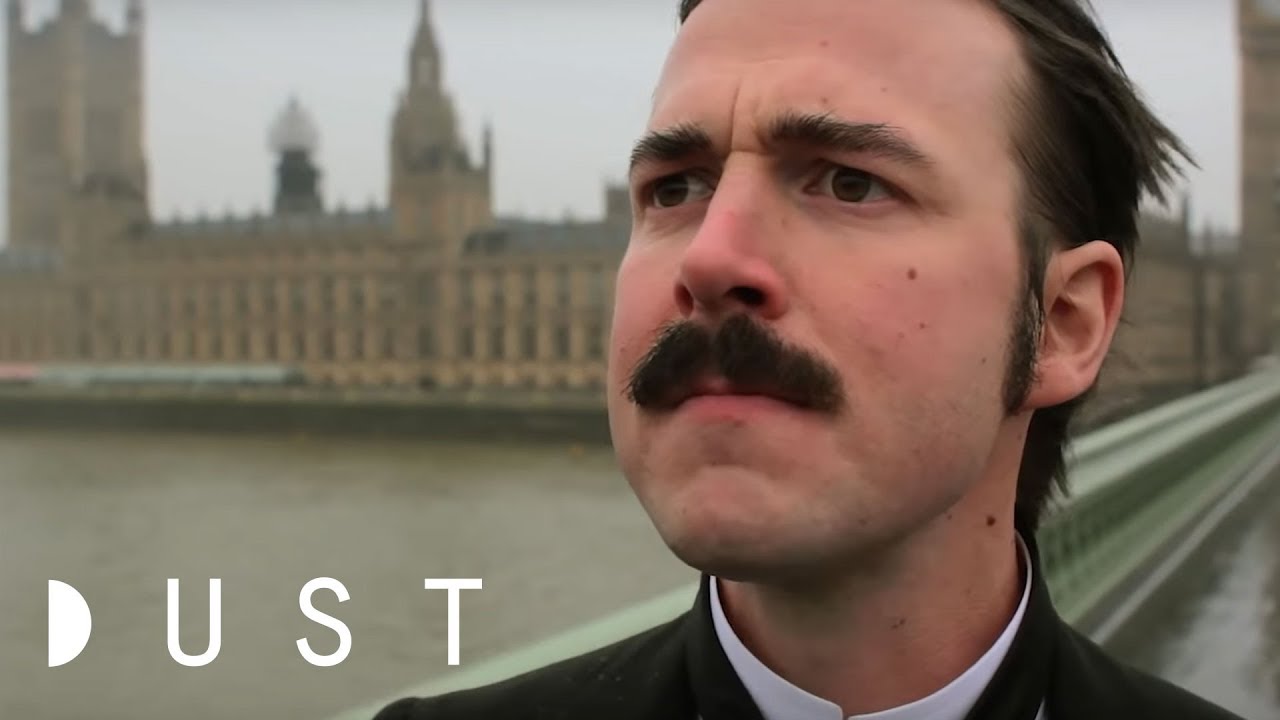
"Collapse-12C" is written by Nancy Kress and performed by Alfred Molina
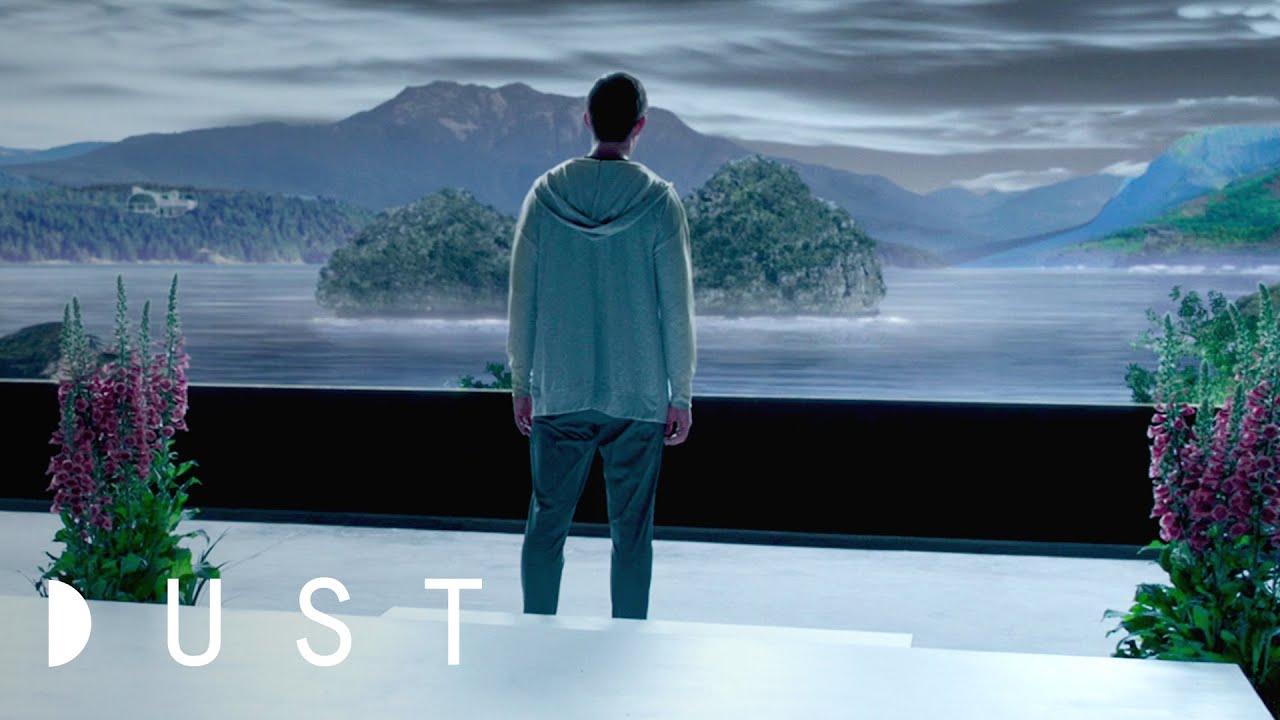
Visuals provided by DUST FLOW. FLOW is a meditative experience designed to send you into a state of digital relaxation.
About DUST: DUST presents thought-provoking science fiction content, exploring the future of humanity through the lens of science and technology. From timeless classics to cutting-edge movies, series, short films, and podcasts, DUST acquires, produces and distributes all content types.
DUST is also available on Amazon FireTV, AndroidTV, AppleTV, Fubo, IMDBTV, iOS, Peacock, Roku, Redbox, Samsung TV, Sling, STIRR, Tivo, Vizio, Xumo and 7Plus. On our OTT platforms, we offer cutting-edge and classic feature films, series, podcasts, and our entire shorts library. #TheFutureAwaits
"
Connect with DUST Website: http://www.watchdust.com Sign-up for DUST newsletter: http://eepurl.com/b_SKAz Watch DUST on your TV: Available on Roku, Samsung TV, Apple TV, Android TV...and more Watch more on YouTube: http://bit.ly/2amTSen Follow Us on Facebook: http://bit.ly/2aqYgtZ Follow Us on Instagram: http://bit.ly/2amAhRt
Listen to the DUST podcast: Apple: http://bit.ly/DUST-Audio Spotify: http://bit.ly/DUST-Spotify Stitcher: http://bit.ly/DUST-Stitcher Castbox: http://bit.ly/DUST-Castbox iHeart: http://bit.ly/DUST-iHeart
About Gunpowder + Sky: Creating content that resonates and impacts pop culture conversation, by empowering creators to take risks and experiment relentlessly in the pursuit of novel stories and formats.
https://www.youtube.com/watchdust Subscribe to the DUST and ALTER newsletter: http://eepurl.com/dChYXb
Read the full transcriptHide the full transcript
- (soft, pensive music) - [Kai] Hello there. My name is Kai. If you are lost, I can show you the way.
- Technology may yet save us. Listen and you will see. The story is "Collapse," written by Nancy Kress,
- performed by Alfred Molina. "Flight 008" is brought to you in partnership with XPRIZE.
- (upbeat music) (jet engines roar) At 4:58 a.m. on June 28th, 2020, the passengers onboard ANA Flight 008
- en route from Tokyo to San Francisco are cruising at an altitude of 37,000 feet,
- approximately 1,500 nautical miles off the West Coast of the United States. A small bump,
- otherwise noted as a barely perceptible bout of turbulence, passes flight 008 through a temporary wrinkle
- in the local region of space-time. What these passengers will soon find out as they descend into SFO
- is that the wrinkle has transported them 20 years into the future and the year is now 2040.
- This is story of the passenger in seat 12C. (passengers chattering) - [Narrator] Matthew McCallister, rigid in seat 12C,
- watched SFO security personnel work their way down the aisles of ANA Flight 008 Tokyo to San Francisco.
- Security looked as baffled and frightened as the passengers, but hid it better. There the resemblance ended.
- Security didn't even resemble their ANA counterparts on the flight, pilots and attendants.
- They wore different uniforms in different colors. Fuchsia? Really? And two of the men had hair shaved in fanciful swirls
- with scalps dyed to match their uniforms. They held long, slim wands placed parallel to each passenger's face.
- "Get away from me!" the woman in 11C screamed. She shoved the man with a wand, who said only,
- "Sorry, ma'am, I've finished now," and moved on. When it was his turn, McCallister said quietly, "Camera?"
- Maybe it was McCallister's quietness or his expensive suit or the friendliness he injected into his voice.
- The man answered him equally low: "Facial recognition device with retinal scan."
- Only much later, when McCallister knew how common was the acronym FRS, did he realize the significance
- of the man's using the entire cumbersome name of the device. San Francisco airport already knew
- that no one on ANA 008 belonged here. Already weary from the overnight flight, they'd been held over an hour on the tarmac.
- Nobody's cell worked. If there'd been conflict over allowing the plane to land, shock and fear and argument in the cockpit,
- McCallister didn't know about it. He was merely a passenger. Seated on the aisle,
- his precious briefcase beneath the seat in front of him, he hadn't bothered to watch the approach or landing,
- just one of so many on so many business trips. From what he could see now through ghostly fog,
- the airport looked like any other anywhere, anytime. The woman in 11C erupted again:
- "I demand that you either let us off this plane or explain what's going on!" A groundswell of agreement,
- muttered and agitated, but not yet a mob. Another man boarded the plane. His suit too was fuchsia,
- but otherwise looked more like what McCallister thought of as normal. (announcement bell chimes)
- "Ladies and gentlemen, we ask for your patience. There is an anomaly with this flight.
- Your captain requested an emergency landing at San Francisco but there is no flight plan on record for ANA 008.
- Not here. Not for this time." The muttering grew louder. Someone called, "It's a regularly scheduled flight."
- Someone else yelled, "Tell us what's happening or let us off the damn plane!" Several people stood, moving into the aisle.
- "Yes, all right. Come with me." People pocketed their phones, unloaded luggage from the overheads, carried babies.
- McCallister filed down the jetway with the rest, carrying his oversized briefcase.
- The gate area was empty except for more officials in fuchsia. Too many officials.
- Airport shops and restaurants were shuttered with metal grids fine as spider silk, insubstantial as fog.
- No metal shutters looked like that. No security team wore fuchsia. No international airport was empty
- early on a Tuesday morning. "This way please, ladies and gentlemen." Far down the concourse,
- a SWAT team burst from an elevator, moving fast. People shouted questions, milled in confusion,
- gaped at the advancing SWAT team. More and more people emerged from the jetway. McCallister escaped quickly into a side corridor.
- Through an empty food court, past shuttered stores he didn't recognize, down an unmoving escalator,
- he made it to another concourse just as a spider silk grid descended from the ceiling,
- closing off the entire concourse behind him. Baggage claim held the usual tired crowd
- waiting for luggage, hunting for relatives, hurrying toward ground transportation.
- No one looked at any of the TVs suspended from the ceiling except McCallister. The TVs looked like hollow boxes
- in which holographic figures, two newscasters made of light, set discussing an executive order
- from President Diane Burkhart. Not for this time. By mid-morning it was major news:
- the flight from the past, lost for 20 years, no wreckage ever found. Interviews with the miracle survivors,
- bewildered or furious or terrified, frequently all three. Tearful reunions, mothers staring in disbelief
- at grown sons last seen as toddlers. Then the harder reunions: husbands facing wives now married to someone else;
- people whose elderly parents had died. "I'm the lucky one," McCallister though, not without irony.
- He had no wife, children, parents, girlfriend. He'd always preferred it that way.
- He'd escaped the swarms of news people, government officials and scientists tormenting the other Flight 008 passengers.
- He had cash in his briefcase from the currency exchange in Tokyo. He had hefty bank and brokerage accounts,
- and without instructions to the contrary, those went on forever. He had... He had hysteria rising in his throat,
- like bubbles of carbonation. He forced it down. Control. It was what would get him through.
- What had always gotten him through. He could do this. On the train to Sacramento
- he held the briefcase tightly on his lap. The train, a maglev, raced through the countryside
- almost too fast to see anything. Each car had holo TV. McCallister listened to the news,
- watched the passengers, tried to make out patches of scenery, concentrated on learning as much as he could
- about what had changed in 20 years and what had not. San Francisco still shrouded itself in fog.
- He saw little of the actual city. Female fashion had become more modest. No miniskirts or crop-tops, although jeans were still tight.
- Women's hair was short and curly; young men's shaved in weird patches. Ubiquitous VR parlors,
- their holo-signs emerging from the fog in gaudy colors. "40 scenarios! Play now!"
- Beyond the city the fog cleared. Many roofs were covered by rough, green-white...
- Something. What was that about? Mountains and trees did not change. A packaged turkey sandwich
- tasted just as bland and unappealing as always. This was oddly comforting. TVs still had commercials: Chevrolet, Coke,
- a remake of a movie, the mega-hit classic that McCallister, who liked movies, had never heard of.
- His cell still didn't work. The woman across the aisle took a piece of cloth from her pocket,
- unfolded it and began speaking. Images appeared on the cloth. And then the maglev slowed for a sharp turn,
- passing the most important thing in his world: a field of cucumbers. Nothing else had shocked him as much as those plants,
- yellow flowers open to the sun, acres of cucumbers. He sank back in his seat, knuckles gone white on the briefcase.
- How? Keep control. He didn't expect his apartment, a sterile micro in a low-rise building
- not far from where he'd grown up, to still be his, not after 20 years of delinquent rent.
- But it stood down the block from his bank, so he spent a few minutes gazing up at its third-floor windows.
- The mixed-use neighborhood had gentrified a little in two decades, but hadn't otherwise changed as much as he'd expected.
- The pocket park was better maintained. Houses that once had tricycles and saplings in their yards
- now had electric cars and mature trees. A middle-aged woman said, "Matthew McCallister?"
- He turned. Carrie Donnegan, whom he'd known since high school. She had been 23, six years younger than he, when they'd dated.
- A little heavier, still pretty, rings on her left hand. He forced a smile. "It is you.
- Well, I haven't seen you since you moved away so abruptly, what, 20 years ago? You look amazing.
- You never said goodbye, you know." "No, sorry." He'd broken up with her six weeks ago.
- The usual reason. She'd shown signs of caring too much, of wanting a real relationship.
- "How are you? What brings you back to your old stomping grounds?" "Bank business."
- The bubble of hysteria was rising again. Control. "How... How have you been?" "Great."
- Her smile seemed genuine, without reproach. I married Sean Persing. We have two great kids.
- You remember Sean. "Of course." They'd been on the basketball team together in high school,
- the last time McCallister had made a friend. Except for Eric, of course. Carrie laughed. "Of course you do.
- You always had a good memory. Are you in town long?" He had no idea. "Depends." "Well, come to dinner. Sean would love to see you again.
- Here, I'll trans my wrister code." She did something to the slim bracelet on her right wrist
- and waved it toward McCallister. "There, now we're in touch again. Oh, Sean will be so pleased.
- So what have you been doing? Are you married? Kids? Where do you live now?" "No. New York.
- Sorry, but I have to go. Bank appointment. But first, what are those pale lichen thingies on so many roofs?"
- Carrie smiled. (laughs) "Good one, Matt. It's nice that you've finally developed a sense of humor.
- And fashion, too, love the vintage suit. Very New York. Now don't forget to call."
- Carefully, McCallister set his briefcase on the floor of the bank manager's office.
- He clasped his hands tightly on his lap. He had just learned that he was dead. "You must have known," said the manager,
- a woman wearing a brown pantsuit of severe cut except for small ruffles on the shoulders,
- "that a passport which expired 19 years ago wasn't going to let you steal an identity,
- even if you didn't know that Matthew Richard McCallister's accounts closed when his will was probated.
- "I... It..." But McCallister caught himself. He was determined to keep his time travel secret,
- at least until things cooled off. "Please leave the premises before I call the police."
- McCallister left. He collapsed, shaking onto a stone bench in the tiny park as the full, actual nature
- of the catastrophe washed over him. Dead. He'd made the will decades ago when he'd scored with his first patent.
- Too busy to move from his modest apartment, too busy to have a life except for intermittent sex with Carrie Donnegan.
- He'd had the bank set up a brokerage account, a business line of credit, estate planning.
- There was going to be money, lots of money. He was sure of that. It made good sense to control where it went
- sometime in the far future. His parents had passed on. He had no siblings. He left his budding fortune to his cousin Bill.
- They weren't close, but McCallister had preferred Bill to his sisters, the giggle twins.
- His cell said no service, but he could access stored data. He found his cousin's address
- on the other side of Sacramento, walked to a major avenue and hailed a cab. If Bill had moved...
- He hadn't. He'd died. His wife, widow, hadn't changed much. Eileen was still beautiful in a trashy sort of way,
- still greedy, still heartless. Her shock at seeing McCallister had lasted only a moment,
- replaced by the steely coldness that had existed between them since McCallister urged Bill not to marry her.
- "You're dead," Eileen had said. "Clearly not." Her apartment was jammed with packing boxes,
- pictures leaning against the wall, a rolled-up rug. Eileen folded her arms across her chest.
- "I'm moving. Bill died six months ago. Of one of the only cancers they can't cure.
- Typical of him. But you don't know that because you were on that Japanese flight
- that's all over the news, weren't you?" She was quick, had always been quick, but without imagination.
- A plane transported in time didn't interest her at all. Instead she said: "I inherited from Bill,
- including everything you left him. He never spent it. Never lost hope that you'd be found, poor sap.
- The money is mine now, Matt, and you're not getting any of it, so forget that idea right now."
- "Eileen-" "No. You tried to get me out of Bill's life. Now I want you out of mine.
- Go make another pile of money with that oh-so-inventive brain of yours or sell your story to the movies or whatever.
- I don't care. Just go. Now." He'd never realized how much she'd resented his trying to save Bill from her suffocating control.
- One option left. McCallister couldn't rent a car, having no valid driver's license or credit card.
- The holo-news at the bus station said the government was issuing emergency IDs to the passengers on Flight 008,
- but to get one he'd have to go back to San Francisco and prove who he was, and then he'd belong to officialdom and the press.
- They would control him utterly. No. The bus had no gasoline exhaust and no driver.
- Ordinarily this would have fascinated him, but the hysteria was creeping in again
- and he put his hand over his eyes and tried to talk himself into calm. "You all right, sir?"
- An elderly lady sitting next to him. He didn't want to talk to her. He nodded and feigned sleep.
- When he finally opened his eyes she was knitting. The homely, archaic task somehow steadied him.
- Not everything had changed. His sleep became real. He woke an hour out of Sacramento feeling more in control.
- The old lady was still knitting. "Ma'am? Can I ask you something? I've been out of the country a while.
- What are those green-white lichen-like things on the tops of the houses and barns?"
- Her answer was precise, surprising him. He'd underestimated her. "The climate coolers?
- They have a high albedo to reflect sunlight back into space. My grandson..." McCallister wasn't interested in her grandson.
- "And how long have Greyhound buses been driverless?" "Oh, you have been away for a bit, haven't you?
- Years now. Very safe, no need to worry." "No, I... What game are those kids playing?"
- Three or four children dispersed throughout the bus bent over tablets. On the closest one McCallister could see
- holograms folding into themselves and then rising up again in different shapes. Every once in a while
- a child would pop over the back of the bus seats and grin in triumph and the boy near McCallister
- would scowl and concentrate harder. The woman said, "You've never heard of Polyhedron?
- Where did you say you'd been living?" McCallister stopped asking questions. His fingers closed on the briefcase,
- which he'd declined to stow overhead as if it were a life raft in a choppy ocean.
- It was sunset before he'd walked from the bus depot to the farm. No other way to get there. Or to tell Eric he was coming.
- McCallister was hot, sweaty, shaky inside. Eric had been so much older than Bill.
- If he too had died... Sunset, with vivid colors that had not changed in 20 years,
- in a million years, gave way to twilight. The sky, wide and clear over farmland, purpled,
- showing the first bright summer stars. Roadside weeds bloomed, Queen Anne's lace and buttercups
- and briefly the smell of wild strawberries. The briefcase grew heavier. McCallister trudged past fields of corn, celery, melons.
- At the first field of cucumber he stopped and activated the flashlight on his phone.
- The cukes were Eurekas, nearing harvest. He ran his finger over the large leaves,
- hairy stems, firm fruit. No mushy feel at the flower end, which would've indicated inadequate pollination.
- Slicing cucumbers could be grown without pollination, but pickling fruit required it.
- No beetles, carriers of mosaic disease. Cucumbers were more tender than tomatoes or peppers.
- Whatever had worked here would work on other crops as well. His heart shriveled.
- The windows of the farmhouse glowed. When Eric Cormer opened the door, McCallister gasped,
- a deep eruption from a pit of relief. Eric, an old man 20 years ago, looked much older now,
- bent, walking with a cane, but he was the steadier of the two. "Matt?" "It's me."
- The most inadequate statement he'd ever made. Eric's brain, if not his body, remained supple.
- He sat Matt at the kitchen table, gave him a whiskey, listened to his story, told his own.
- The kitchen hadn't changed in 20 years, or 40, although the green and white sprig wallpaper had faded.
- But so much else was different. Eric's grandson Luke ran the farm now, skipping the generation that had left farm life
- for Sacramento and L.A. Luke still used Matt's first agri-patent, the irrigation system tested right here
- when California had grown 40% of the nation's fruit, vegetables and nuts, before the bees, the pollinators,
- had died of colony collapse syndrome and hand pollination had sent the price of cucumbers soaring.
- The almond market crashed almost completely. Tomatoes, peppers, so much more, all affected.
- "Now the market's better than ever," Eric finished, "and I've got three fields of organic cukes.
- Drink up, Matt." Despair had turned the whiskey nauseating, the kitchen gray. McCallister opened his briefcase
- and pulled out his prototype, so successfully demonstrated to the eager Japanese manufacturer two days ago.
- 20 years ago. Eric picked up the little drone, and inch and a half square coated with bristles
- and a patented gel. It transferred pollen from male to female plants under remote control by a human operator.
- Eric's fingers, twisted with arthritis and tough-skinned as Matt's shoes, handled the artificial pollinator with respect.
- With sorrow. Matt said, "When did they cure colony collapse? And how?" "They didn't.
- Bees are gone. Big economic and ecological upheavals. A lot of farmers tried robo-pollination, like your device.
- Too expensive, too labor-intensive, too slow. The whole valley suffered. I almost lost the farm."
- Eric eyes darkened, remembering. "Then an XPRIZE team came up with tiny pollinating robots that nobody operates.
- FCOs. Fast, cheap and out of control. They swarm continuously all over plants, moving pollen,
- and biodegrade after a month or so. Flimsy things, partly paper, partly M-silk. Run on sunlight."
- "M-silk?" "Metal silk." Eric, knowing how hard this was for McCallister, didn't look directly at him.
- "You must have seen it at the airport. They make fences out of it. Tougher than steel, thin as spider webs."
- "I saw it." McCallister picked up his prototype and put it back in his briefcase.
- Useless. He was 20 years too late. "Look, Matt. You're all-in. Go on up to Penny's old room and sleep.
- We'll talk more in the morning." McCallister couldn't sleep. At 3 a.m. he crept out of the dark house
- to the edge of a cucumber field, the grass dewy under his bare feet, the sweet night air silvered by moonlight.
- Somewhere an owl hooted. He picked a cuke off the vine and held it on his palm. The crop was flourishing, as he was not.
- He had no market for his prototype, no home, no money, nothing, except what charity Eric might choose to give him.
- He, like the FCO, was now cheap and without control, although not, apparently, fast enough.
- Only... Hadn't that been his exact position 25 years ago when he'd met Eric? Orphaned, poor, untried.
- He and the old man had worked day and night on the irrigation project, celebrating every incremental gain,
- open to each fresh possibility. They'd had such fun. So what was different now? McCallister raised his eyes to the farmhouse roof,
- gleaming in the moonlight. Would that work? Using lichen thingies to raise reflected sunlight
- and help cool the climate? Would any of it work? The solar and wind farms he'd seen from the bus. Who knew?
- No one. The whole effort might fail, like anything that substituted experimentation for control.
- His own inventions had never failed. Not once. (soft music) (wings flapping) The owl flapped its wings and rose,
- silhouetted against the moon, escaping gravity. Still, he had been a fast learner.
- All of agribusiness had been new to him once and he had learned. He could propose a partnership with Luke,
- figure out what niches needed to be filled, offer his marketing skills. He still had those.
- TVs went holo, rooftops went green, fences became nearly invisible. Things could be change, or be made to change. People too.
- McCallister bit into the cucumber. Not quite right. And anyway, he didn't like the taste of cucumber. Never had.
- He spit it out and strode, barefoot and suddenly lighter on the cool grass, to the farmhouse.
- Maybe he would even call Sean and Carrie. (bright music) (upbeat music) - [Kai] Species will die,
- technology will fail, but human ingenuity may prevail. Follow me and I will show you.
- That was "Collapse" by Nancy Kress, performed by Alfred Molina. This episode was directed and produced by Mark Holden,
- edited by Seth Alansky, and designed by Neil Wogensen at The Invisible Studios. Season Two of Dust is brought to you
- in partnership with XPRIZE, designing and operating multimillion-dollar global competitions
- to accelerate the development of technological breakthroughs that benefit humanity;
- and ANA, All Nippon Airways. "Flight 008" is co-produced with Eric Desatnik. Dust is produced by Stephen Michael and Margaret Laney
- at Gunpowder & Sky.
Brief Summary
A time-displaced inventor finds his pollination prototype obsolete in 2040, then considers starting over on a farm transformed by bee loss and robotics.
Key points
- A Flight Out of Time. A barely perceptible bump sends ANA Flight 008 twenty years into the future. The passengers land in a world that has moved on without them.
- The Inventor Who Was Declared Dead. McCallister discovers his identity and accounts are gone, and the future has no place for the life he left behind. His attempt to reclaim his inheritance only deepens the shock.
- A Reunion on the Farm. After fearing his old friend might be gone, McCallister finds Eric alive and learns how the world changed while he was missing. The reunion brings relief, but also the truth about his invention.
- The Future Has Already Solved It. McCallister’s prototype was designed to pollinate crops, but autonomous robots have already taken over the job. The invention he hoped would secure his future is obsolete.
- Starting Over. McCallister remembers building a life from nothing with Eric and wonders what has changed. He considers whether he can learn again and find a place in the future.
- A Future Worth Trying For. Facing uncertainty about climate solutions and a world transformed by technology, McCallister considers partnering with Luke and putting his marketing skills to use.
Episode highlights
- A Flight Out of TimeA barely perceptible bump sends ANA Flight 008 twenty years into the future. The passengers land in a world that has moved on without them.“Not here. Not for this time.”1:02Jul 1, 2022
- The Inventor Who Was Declared DeadMcCallister discovers his identity and accounts are gone, and the future has no place for the life he left behind. His attempt to reclaim his inheritance only deepens the shock.“He had just learned that he was dead.”13:02Jul 1, 2022
- A Reunion on the FarmAfter fearing his old friend might be gone, McCallister finds Eric alive and learns how the world changed while he was missing. The reunion brings relief, but also the truth about his invention.“Matt?”20:48Jul 1, 2022
- The Future Has Already Solved ItMcCallister’s prototype was designed to pollinate crops, but autonomous robots have already taken over the job. The invention he hoped would secure his future is obsolete.“He was 20 years too late.”22:24Jul 1, 2022
- Starting OverMcCallister remembers building a life from nothing with Eric and wonders what has changed. He considers whether he can learn again and find a place in the future.“So what was different now?”25:19Jul 1, 2022
- A Future Worth Trying ForFacing uncertainty about climate solutions and a world transformed by technology, McCallister considers partnering with Luke and putting his marketing skills to use.“Things could be change, or be made to change. People too.”25:41Jul 1, 2022
- Human Ingenuity May PrevailThe episode closes with a hopeful reminder: even as species die and technology fails, human ingenuity may endure.“Species will die, technology will fail, but human ingenuity may prevail.”27:12Jul 1, 2022