Sci-Fi Digital Series “Afrofuturism” Sun Ra Part 1 | DUST
Episode Description
We need Afrofuturism; not as a box to put people in, but as a lens with which to change the way we imagine and actualize an inclusive future. A future where black people are in control of their own destinies.
More About Afrofuturism: Welcome to the first video in our 5 part original series Afrofuturism: Ep 1 Sun Ra.
Afrofuturism is not a sub-genre. For some, like Sun Ra, Afrofuturism (though the term was not coined until after Sun Ra passed away) is a form of escapism; a reprieve from violent systems of segregation and white supremacy. For others, Afrofuturism is a celebration of black innovation; filmmaker and author Ytasha Womack describes Afrofuturism as, “The intersection between black culture, technology, liberation, and the imagination, with some mysticism thrown in, too.” For some it is highly spiritual. Above all else, it is an ambitious vision of the future and mankind's place in it that is continually informed by black culture and history. What kind of message is sent when mass audiences are presented with visions of the future that do not include people of color? Since Hollywood has historically excluded black characters from leading roles in science fiction films, black people have had to envision and ultimately create space for themselves above and beyond the Earth's atmosphere. In DUST’s original series, we celebrate a handful of those people, and encourage you to dive deeper into the Afrofuture.
We present to you the stories of: - Sun Ra: Considered the forefather of Afrofuturism. - Uhura: One of the lieutenants on Star Trek’s Starship Enterprise. Portrayed by Nichelle Nichols in the original series, she counted Martin Luther King as one of her biggest fans. - George Clinton: Whose brand of funk was filled with cosmic imagery. - Jimi Hendrix: Who often imagined himself as an alien. - Missy Elliott: Who popularized the pairing of science-fiction and hip-hop.
About DUST: DUST presents thought-provoking science fiction content, exploring the future of humanity through the lens of science and technology. From timeless classics to cutting-edge movies, series, short films, and podcasts, DUST acquires, produces and distributes all content types.
Connect with DUST Website: http://www.watchdust.com Sign-up for DUST newsletter: http://eepurl.com/b_SKAz Watch DUST on your TV: Available on Roku, Samsung TV, Apple TV, Android TV...and more Watch more on YouTube: http://bit.ly/2amTSen Follow Us on Facebook: http://bit.ly/2aqYgtZ Follow Us on Instagram: http://bit.ly/2amAhRt
Listen to the DUST podcast: Apple: http://bit.ly/DUST-Audio Spotify: http://bit.ly/DUST-Spotify Stitcher: http://bit.ly/DUST-Stitcher Castbox: http://bit.ly/DUST-Castbox iHeart: http://bit.ly/DUST-iHeart
About Gunpowder + Sky: Creating content that resonates and impacts pop culture conversation, by empowering creators to take risks and experiment relentlessly in the pursuit of novel stories and formats.
Read the full transcriptHide the full transcript
- The term Afrofuturism first appeared in an essay titled, BLACK TO THE FUTURE, by Mark Dery, in 1994—
- but its roots go back to a fateful night in the late 1930s in Huntsville, Alabama.
- On that peculiar evening a beam of light shot down from the sky, and lifted Herman “Sonny” Blount into an alien spacecraft.
- On a voyage to Jupiter, his alien captors prompted him with a mission: to transport black people away from the violence and racism of Planet Earth.
- “Sonny” became Sun Ra, who worked on the other side of time. His songs were both far-out and yet somehow familiar—
- a reaction to the trauma of Black Life in the United States. He believed no place on Earth was safe for Black people,
- and who could argue otherwise? His spacecraft was his Ark. His band was known as his Arkestra.
- On his cosmic voyage came many Earthly stops… A stint in jail during World War Two for being a conscientious objector;
- the cover of Rolling Stone in 1969… Later that year, a concert in Egypt and a visit to the Pyramids,
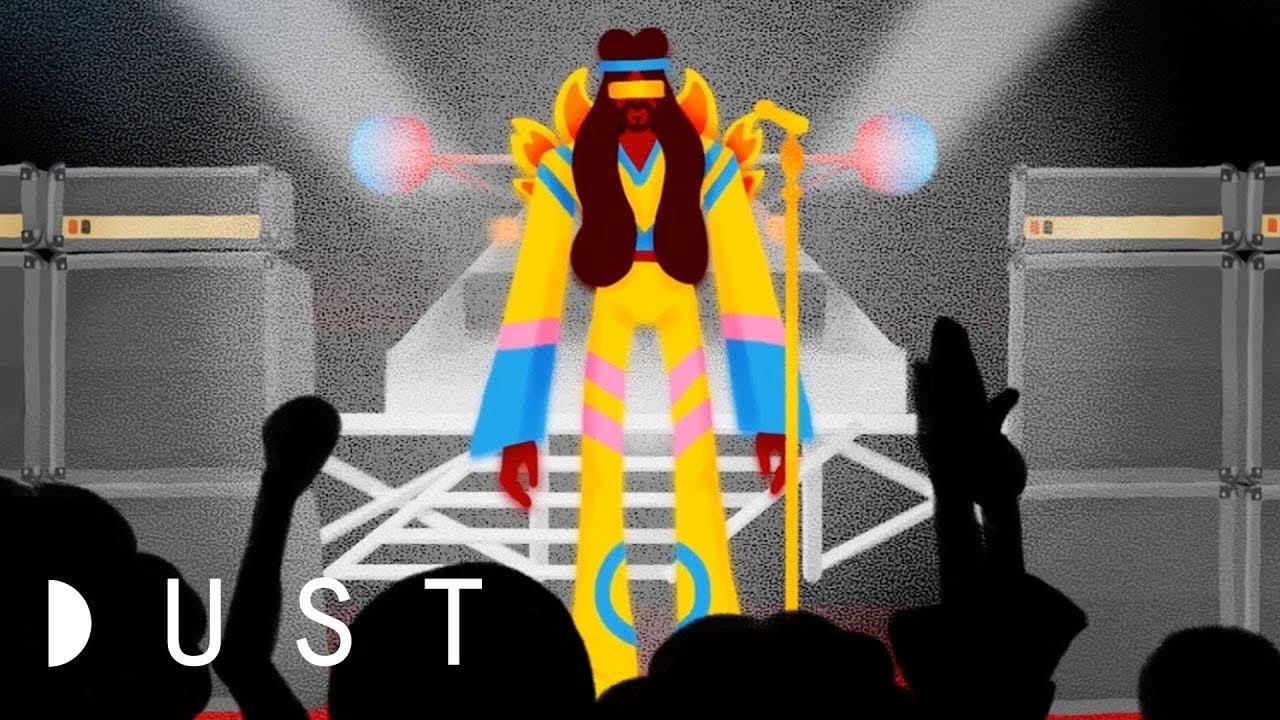
- where Africans first looked to the stars… …And in 1978, the Arkestra performed on Saturday Night Live.
- Nowhere was the message clearer than in his 1973 film, Space is the Place, a movie that found Sun Ra recruiting Oakland’s black citizens to join his space program.
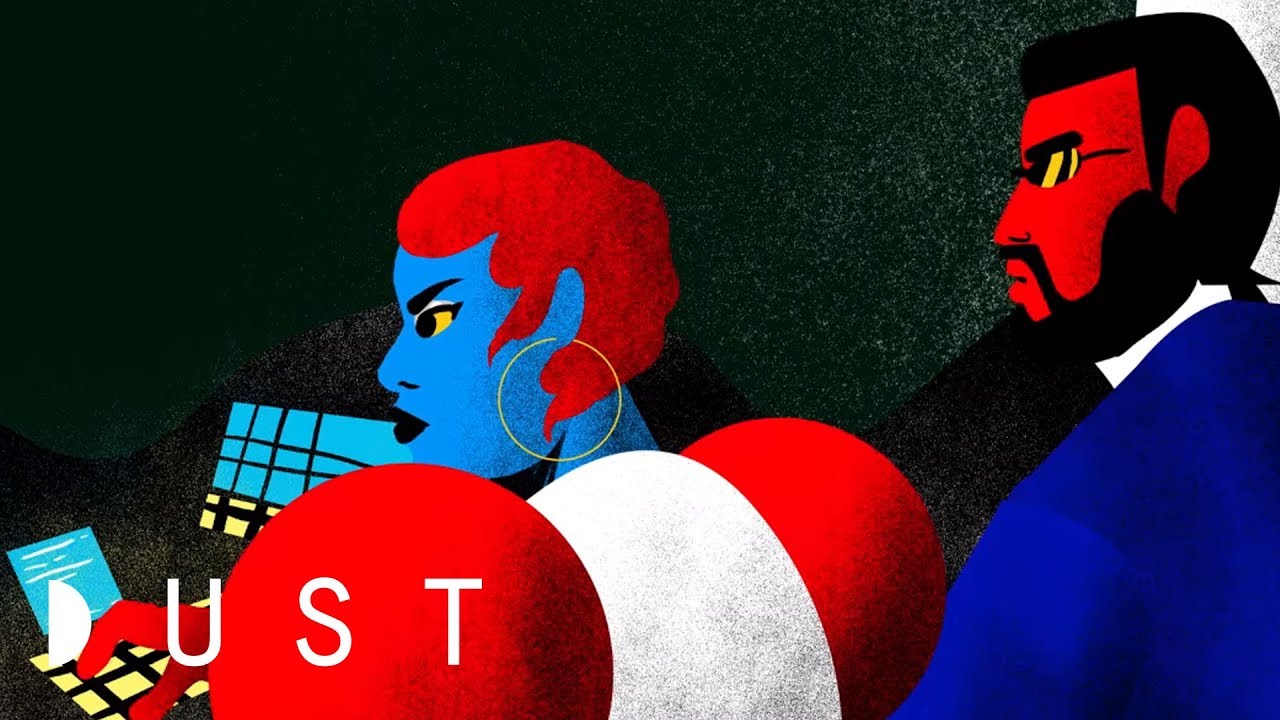
- There are less than a dozen black characters in the entire Star Trek franchise, one in the original Star Wars trilogy,
- and none at all in The Jetsons. It was imperative for Sun Ra and his Arkestra to fly their own spaceship.
- Ever since the Arkestra knocked at the door of the cosmos, Black musicians have imagined themselves surfing on the Astral Plane,
- traveling through space and time. The influence of this Afrofuturism has even found its way to Hot Topic,
- where you can now purchase a shirt that reads, “SPACE IS THE PLACE”. Sun Ra left Earth for the final time in 1993.
- What does it say about how far we have or have not come if his message still resonates with each new generation?
Brief Summary
Sun Ra and the Arkestra used cosmic music and science fiction to imagine Black freedom beyond Earth’s racism and exclusion.
Key points
- A mission beyond Planet Earth. After a beam of light carries Herman “Sonny” Blount into an alien spacecraft, he is given a mission to take Black people away from Earth’s violence and racism.
- Sun Ra’s Ark. Sun Ra’s spacecraft becomes his Ark, and his band, the Arkestra, joins him on a cosmic voyage that includes jail, the Pyramids, and Saturday Night Live.
- Making space in science fiction. The narrator points to the scarcity of Black characters in major science-fiction franchises and explains why Sun Ra and his Arkestra had to imagine their own spaceship.
- The message still resonates. Sun Ra left Earth in 1993, but the episode closes by asking whether the world has changed enough for his message to stop resonating with each new generation.
Episode highlights
- A mission beyond Planet EarthAfter a beam of light carries Herman “Sonny” Blount into an alien spacecraft, he is given a mission to take Black people away from Earth’s violence and racism.“to transport black people away from the violence and racism of Planet Earth.”0:24Feb 8, 2017
- Sun Ra’s ArkSun Ra’s spacecraft becomes his Ark, and his band, the Arkestra, joins him on a cosmic voyage that includes jail, the Pyramids, and Saturday Night Live.“His spacecraft was his Ark.”0:59Feb 8, 2017
- Making space in science fictionThe narrator points to the scarcity of Black characters in major science-fiction franchises and explains why Sun Ra and his Arkestra had to imagine their own spaceship.“It was imperative for Sun Ra and his Arkestra to fly their own spaceship.”1:41Feb 8, 2017
- The message still resonatesSun Ra left Earth in 1993, but the episode closes by asking whether the world has changed enough for his message to stop resonating with each new generation.“What does it say about how far we have or have not come”2:13Feb 8, 2017