Sci-Fi Digital Series “Afrofuturism” Star Trek's Uhura Part 2 | DUST
Episode Description
What kind of message is sent when future worlds are depicted without black people?
More About Afrofuturism: Star Trek’s Nyota Uhura, a commander aboard the Starship Enterprise, was the first black character in a major role to be depicted in outer space. Uhura was played by Nichelle Nichols in the original series, and first appeared in 1966. In reality, it would take nearly 30 years for a black woman to make it to space – NASA astronaut Mae Jemison, in 1992. In episode two of DUST’s Afrofuturism series, Uhura beams up Sun Ra, Martin Luther King, and the aforementioned Jemison, as narrator Little Simz tells us the true story of how King convinced Nichelle Nichols to stay on the show after the first season. Nichols would go on to appear in 66 episodes.
About DUST: DUST presents thought-provoking science fiction content, exploring the future of humanity through the lens of science and technology. From timeless classics to cutting-edge movies, series, short films, and podcasts, DUST acquires, produces and distributes all content types.
Connect with DUST Website: http://www.watchdust.com Sign-up for DUST newsletter: http://eepurl.com/b_SKAz Watch DUST on your TV: Available on Roku, Samsung TV, Apple TV, Android TV...and more Watch more on YouTube: http://bit.ly/2amTSen Follow Us on Facebook: http://bit.ly/2aqYgtZ Follow Us on Instagram: http://bit.ly/2amAhRt
Listen to the DUST podcast: Apple: http://bit.ly/DUST-Audio Spotify: http://bit.ly/DUST-Spotify Stitcher: http://bit.ly/DUST-Stitcher Castbox: http://bit.ly/DUST-Castbox iHeart: http://bit.ly/DUST-iHeart
About Gunpowder + Sky: Creating content that resonates and impacts pop culture conversation, by empowering creators to take risks and experiment relentlessly in the pursuit of novel stories and formats.
Read the full transcriptHide the full transcript
- The year was 1966 and Lyndon B Johnson was president. Race riots continued across the United States,
- Muhammad Ali refused to serve in the Vietnam war, and the Beatles were bigger than Jesus.
- During Jim crow, Nasa relied on the mathematical equations of three black women to win the space race.
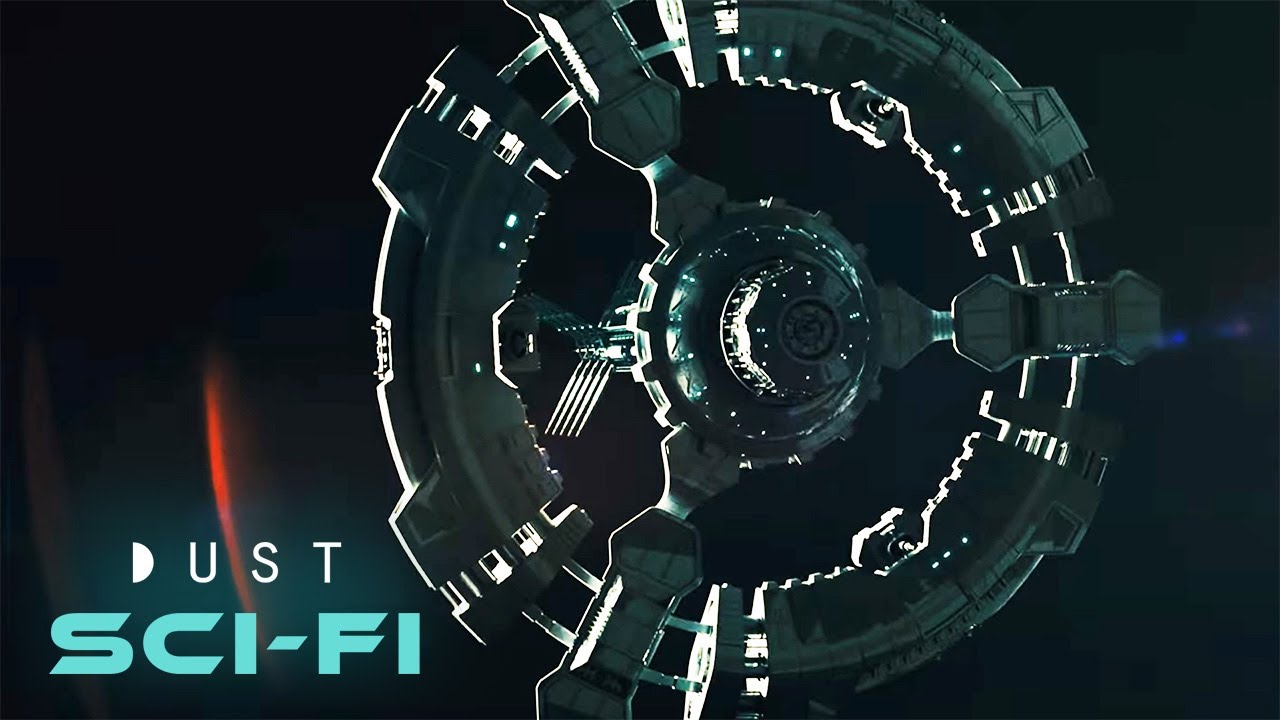
- In 1966, however, a TV show called Star Trek appointed a black woman as one of the commanders of its own spacecraft...
- the Starship Enterprise. Lieutenant Nyota Uhura, played by Nichelle Nichols, was the first black character in a leading role to be depicted in outer space.
- Dr. Martin Luther King Jr. recognized the significance of the ship's diverse crew.
- According to Nichols, it was King who convincer her to stay on after the first season,
- telling her, "You are our image of where we're going. You are three hundred years from now."
- He went on: "For the first time, we are seen as what we should be. You don't have a black role, you have an equal role."
- Thirty years from Uhura's debut, a black woman would reach the true final frontier.
- Astronaut Mae Jemison entered Earth's orbit aboard the space shuttle Endeavor on Sepember the 12th, 1992.
- Black people remain criminally under represented in Hollywood's biggest Sci-Fi films.
- What kind of message is sent when future worlds are depicted without them? Afrofuturism and characters like Uhura are important because they shed light on black people's ability
- ... even as Hollywood fails to catch on. to create, carry, and elevate Sci-Fi roles...
Brief Summary
Uhura’s Star Trek role, King’s encouragement to Nichelle Nichols, and Mae Jemison’s spaceflight show why Black representation in sci-fi matters.
Key points
- Uhura’s equal role. Martin Luther King Jr. recognized the importance of Star Trek’s diverse crew and convinced Nichelle Nichols to stay on the show. He told her that Uhura represented a future where Black people were seen as equals.
- From the screen to space. Nearly 30 years after Uhura’s debut, astronaut Mae Jemison entered Earth’s orbit aboard the space shuttle Endeavor.
- Who gets to imagine the future?. The segment asks what message is sent when Black people are missing from imagined future worlds, and argues for the importance of characters like Uhura.
Episode highlights
- Uhura’s equal roleMartin Luther King Jr. recognized the importance of Star Trek’s diverse crew and convinced Nichelle Nichols to stay on the show. He told her that Uhura represented a future where Black people were seen as equals.“You don't have a black role, you have an equal role.”0:49Feb 21, 2017
- From the screen to spaceNearly 30 years after Uhura’s debut, astronaut Mae Jemison entered Earth’s orbit aboard the space shuttle Endeavor.1:13Feb 21, 2017
- Who gets to imagine the future?The segment asks what message is sent when Black people are missing from imagined future worlds, and argues for the importance of characters like Uhura.“What kind of message is sent when future worlds are depicted without them?”1:26Feb 21, 2017